Project
Miniaturized Dual-Mode Terahertz Bandpass Filter
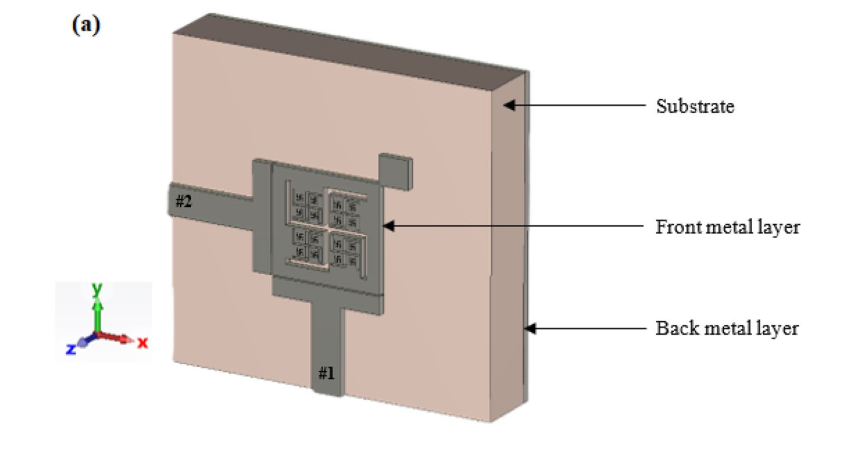
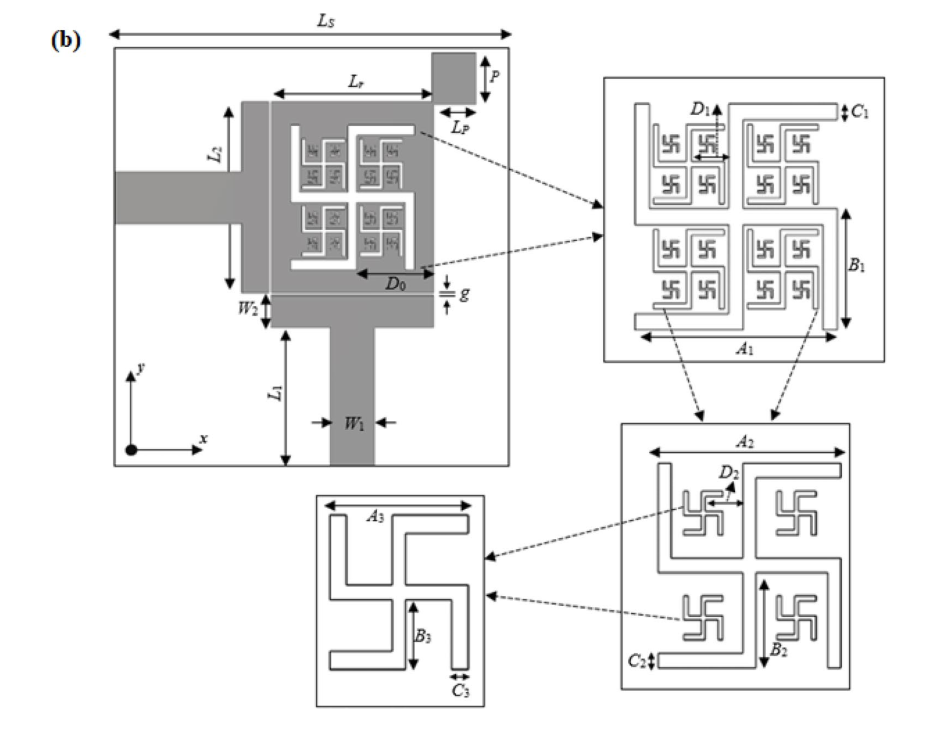
This project presents the design of a miniaturized bandpass filter featuring a square patch perturbed microstrip resonator configuration with Swastik fractal slots for applications in the terahertz regime. The dual-mode behavior demonstrates two transmission zeros on the passband edges, leading to substantial improvement in selectivity while achieving significant size reduction through fractal geometry integration.
View Project📸Project Gallery
🎬Project Media
👤My Role & Contributions
Co-Author & RF Design Engineer
Key Responsibilities
- •Co-designed the miniaturized dual-mode terahertz bandpass filter with Swastik fractal slot integration
- •Performed electromagnetic simulations using CST Microwave Studio for filter design and optimization
- •Analyzed and optimized filter parameters including gap size, perturbation size, and fractal iterations
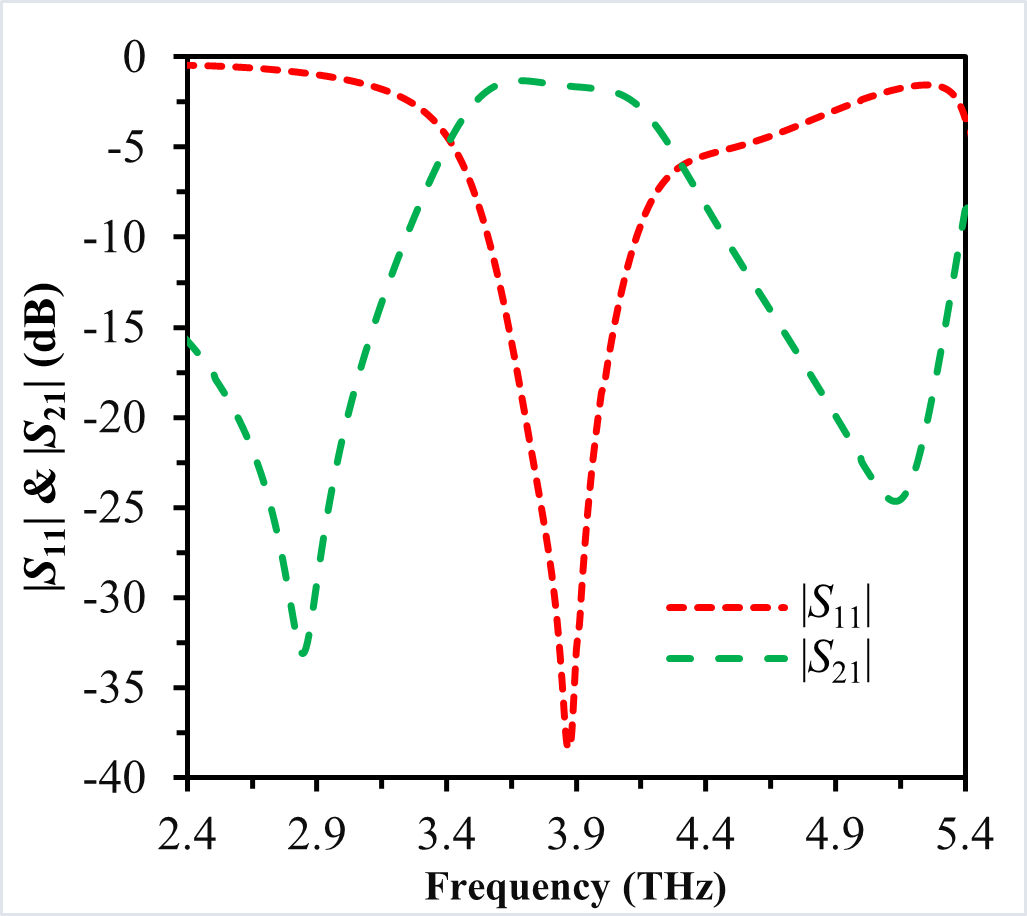
- •Conducted comprehensive S-parameter analysis to evaluate insertion loss, return loss, and transmission zeros
- •Studied dual-mode splitting behavior and coupling coefficient variations with perturbation size
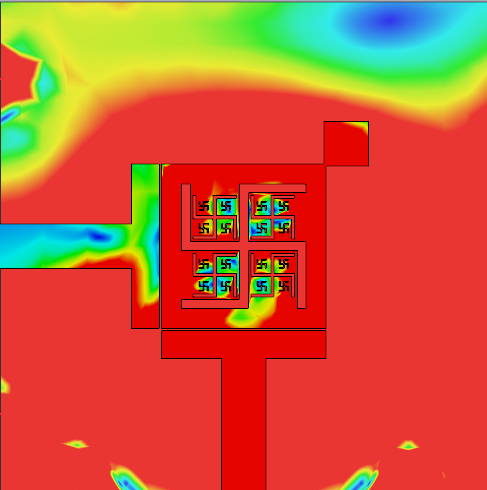
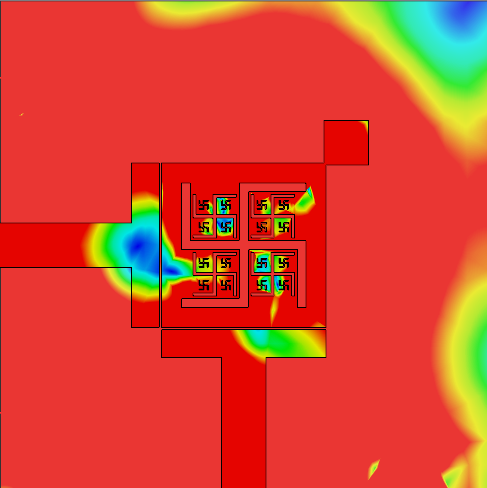
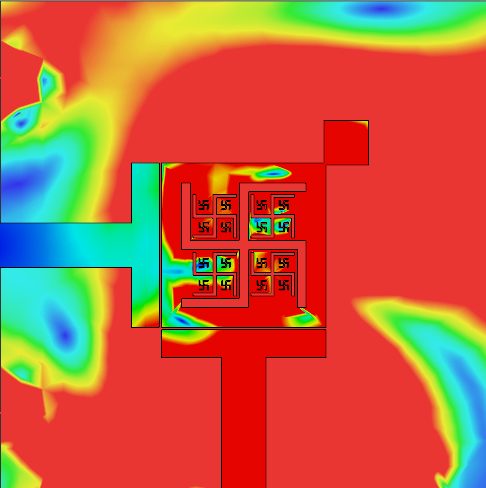
- •Evaluated group delay characteristics and current distribution patterns at different frequencies
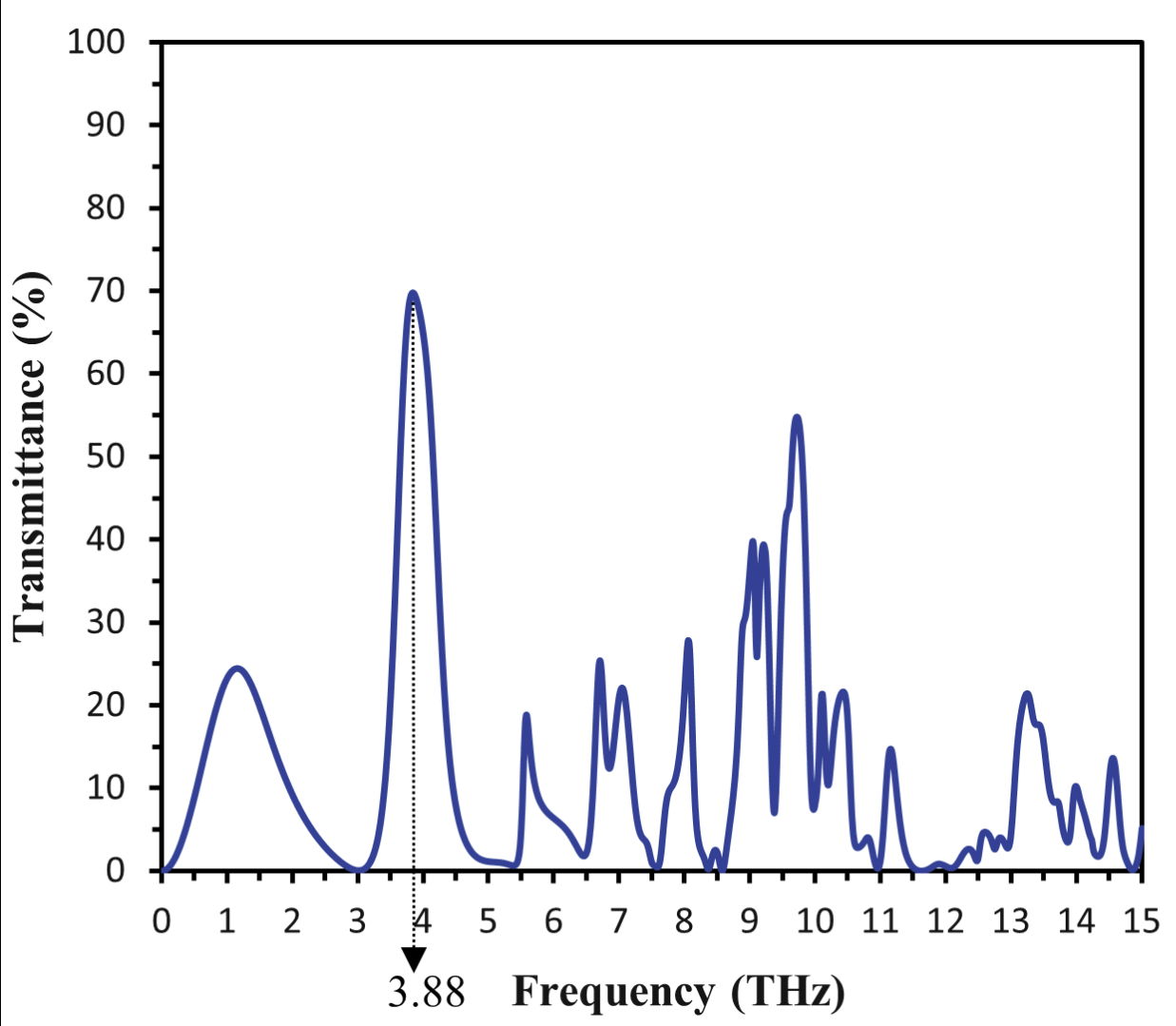
- •Analyzed optical spectra including transmittance, reflectance, and absorbance characteristics
- •Performed comparative analysis with existing terahertz bandpass filter designs
- •Contributed to research paper preparation and publication in Journal of Optics (Springer)
- •Validated filter performance metrics including selectivity, miniaturization, and frequency response
Technologies Used
Problem
Terahertz systems rely on bandpass filters to reduce interference and ensure signal clarity by selectively allowing specific frequency bands to pass. However, designing such filter structures requires innovative approaches to overcome material and structural limitations. Conventional filter designs at terahertz frequencies face challenges in achieving compact size while maintaining high selectivity, low insertion loss, and good return loss. The shift to terahertz spectrum for next-generation communication systems and medical imaging applications demands miniaturized, high-performance filtering solutions that can be cost-effectively integrated into terahertz systems.
Approach
- •Designed a square patch perturbed microstrip resonator configuration using RT/Duroid 6010 substrate with high relative permittivity (εr = 10.7)
- •Integrated Swastik fractal slots into the resonator structure through three iterations to achieve miniaturization without compromising filter characteristics
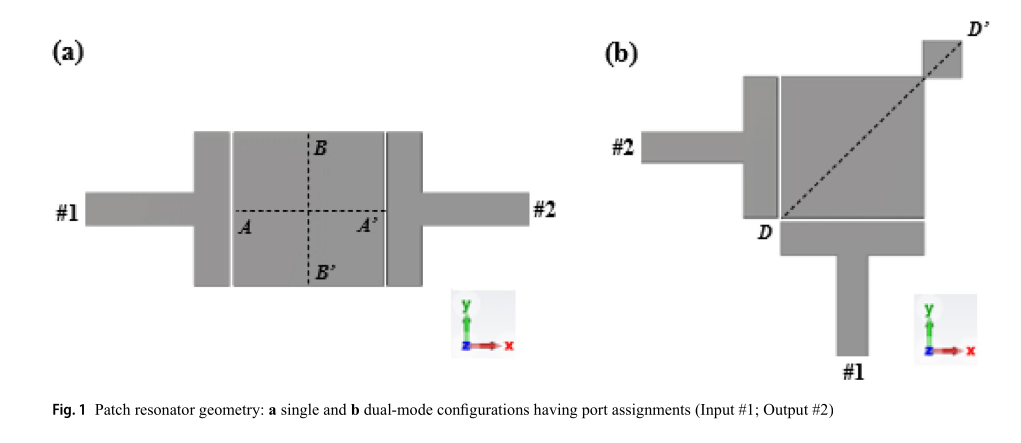
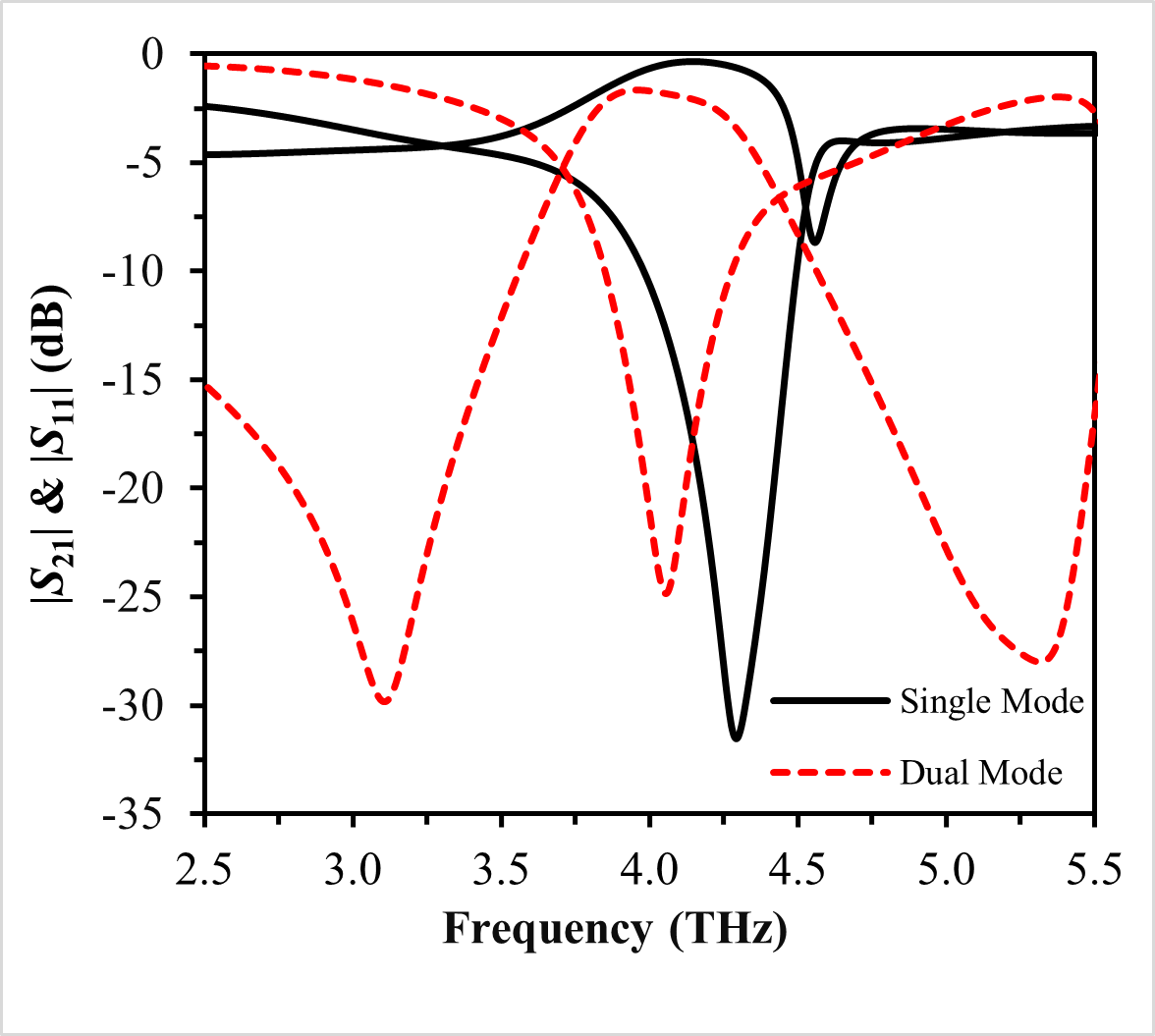
- •Implemented dual-mode functionality by placing a square perturbation at 45° angle relative to the 50 Ω feedlines, aligned with diagonal symmetry plane
- •Optimized filter dimensions including perturbation size (2 μm) and gap size (0.1 μm) for enhanced return loss, insertion loss, and selectivity
- •Utilized full-wave electromagnetic simulator (CST Microwave Studio) for design, simulation, and performance analysis
- •Analyzed S-parameters, group delay, current distribution, and optical spectra to validate filter performance
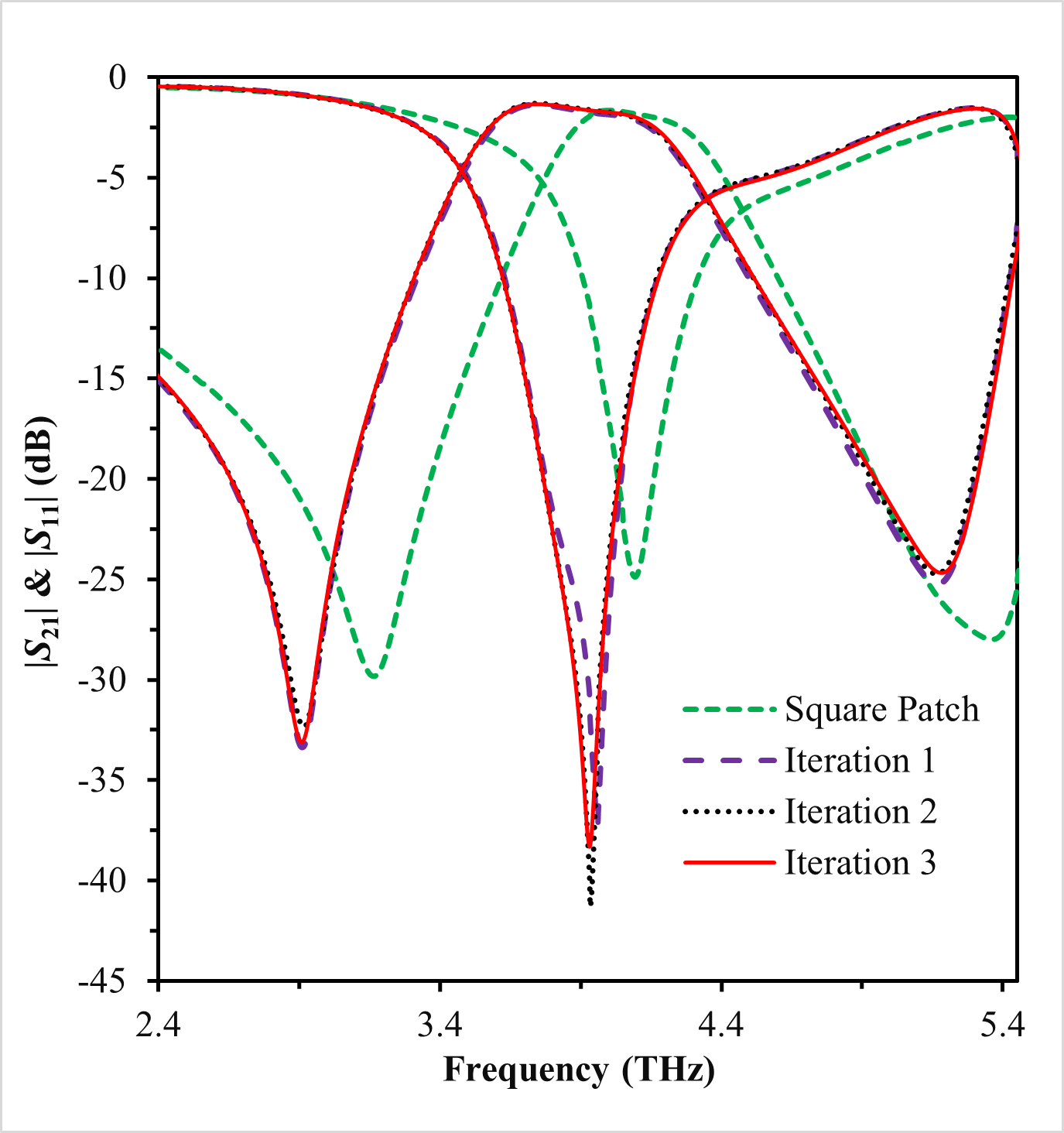
- •Studied the evolution from zeroth iteration (conventional square patch) through three fractal iterations to achieve optimal performance
- •Evaluated the impact of gap size and perturbation size variations on dual-mode splitting behavior and frequency response
Outcome
- •Achieved a miniaturized filter design measuring only 8 × 8 μm² with significant 25.93% reduction in patch size compared to conventional design
- •Demonstrated excellent performance at 3.88 THz with return loss exceeding 38.32 dB and low insertion loss of 1.63 dB
- •Realized dual-mode behavior with two transmission zeros at 2.86 THz and 5.14 THz providing 33.10 dB and 24.63 dB suppression levels
- •Obtained narrow 3-dB bandwidth of 0.788 THz with fractional bandwidth of 20.3%, indicating high selectivity
- •Achieved 70% transmittance at resonance with minimal group delay of 0.8 ps, ensuring excellent signal linearity
- •Published research findings in Journal of Optics (Springer), contributing to terahertz filter design knowledge